Most people who see a continuous line of concertina coils do not attempt to push through—they redirect, wait, or leave.
A razor wire barrier deterrent operates on two levels at once: it is physically difficult to cross, and it is visually unmistakable.
The Physical Layer
Galvanised steel blades on a high-tension coil are not something a person can grip, climb, or cut through with bare hands or common tools.
The coil geometry means that even if someone reaches in, the wire wraps and tightens rather than yielding.
The Psychological Layer
The mechanism is straightforward:
1.Risk assessment – A person approaching a perimeter evaluates effort versus reward. A visible coil signals high effort and high injury risk.
2.Social proof – When one person in a group stops, others follow. The barrier creates a natural pause point.
3.Authority signal – A deployed coil communicates that the area is actively protected, not abandoned or unmonitored.
Why Ordinary Barriers Fall Short
Water-filled barriers, plastic fencing, and chain-link without topping all communicate the same message: this can be moved, climbed, or cut. They delay, but they do not deter.
A visible perimeter security solution using concertina wire sends a different signal entirely. It tells the approaching person, in plain visual language, that the cost of crossing is not worth the effort.
Pairing Deterrence with Function
The most effective setups combine the psychological stop of the coil with a structural stop behind it:
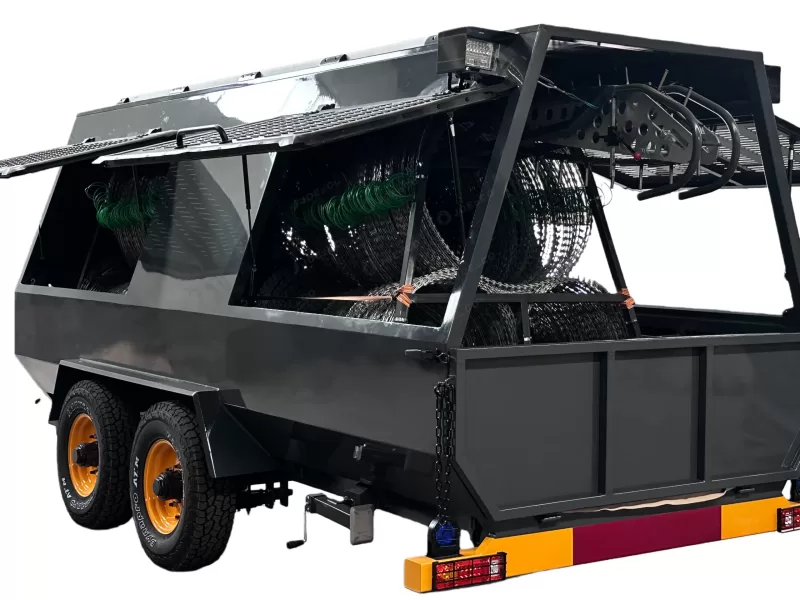
- Crowd control – BTO-22 coils (lower injury profile) on portable frames, with signage and clear sightlines.
- High-security sites – CBT-65 coils paired with vehicle barriers or anti-ram posts for layered defence.
- Coastal or corrosive environments – Stainless steel coils that maintain visual presence without rust degradation.
The coil deters the individual. The frame and backing system stop the vehicle. Together, they cover the full threat spectrum.
See the Difference on Your Site
Request a site-specific layout showing where a razor wire barrier deterrent line would be most effective—and where additional layers are recommended. We will include coil type, height, and coating options matched to your environment.