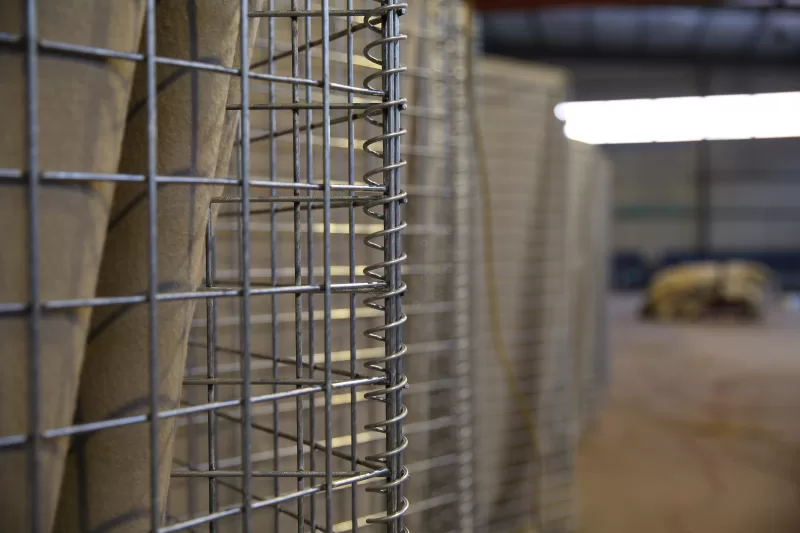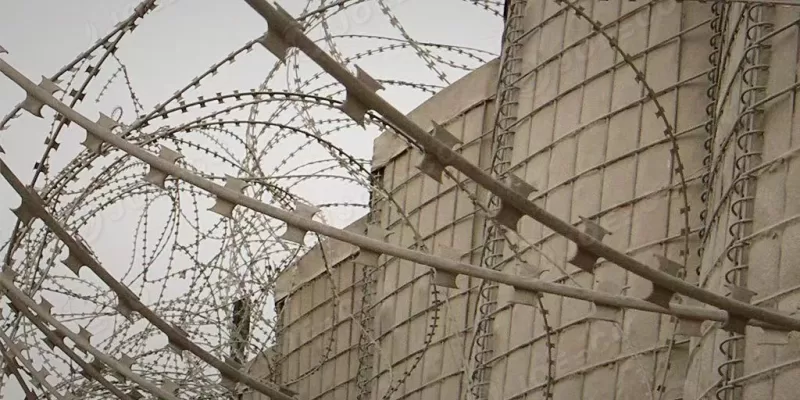
Modern construction projects demand speed, resilience, and adaptability—requirements perfectly addressed by JOESCO barrier construction methods. These engineered systems transform collapsible steel-mesh containers into permanent defensive structures through optimized assembly protocols. Unlike static concrete walls, JOESCO Concertainers® deploy in hours using localized fill materials, making them indispensable for military bases, flood control sites, and critical infrastructure protection.

Core Construction Principles
JOESCO barrier construction relies on three foundational principles:
- Modular Assembly: Units interlock via ASTM F2656-rated steel connectors, creating continuous barriers adaptable to curves or slopes.
- Mechanized Filling: Deploy loaders or conveyors to fill containers with on-site soil/gravel at 40–60 tons/hour, eliminating material transport costs.
- Terrain Integration: Laser-graded foundations ensure <5mm ground clearance, while anchor kits secure units on unstable substrates like sand or marshland.
Standardized Installation Workflow
Phase 1: Site Preparation
- Conduct topographical surveys to map barrier alignment and load-bearing zones.
- Clear vegetation and compact soil to 95% Proctor density for foundation stability.
- Deploy geotextile underlayment on porous ground to prevent fill erosion.
Phase 2: Unit Assembly
- Unfold collapsed Concertainers® vertically and interlock adjacent units using corrosion-resistant pins.
- Stagger joint placements in multi-layer configurations to enhance structural integrity.
Phase 3: Filling & Compaction
- Fill compartments in 30cm lifts using backhoes or conveyor belts.
- Compact each layer to 85% density with vibrating plates before adding subsequent lifts.
- Maintain ≤5% moisture content in fill material to avoid settling.
Phase 4: Integration & Reinforcement
- Install Anti-Ram Overlap Kits (ARK) for vehicle-impact resistance: Weld supplemental steel plates to absorb 15,000lb force at 50mph.
- Embed IoT sensors in fill material for real-time structural health monitoring.
Technical Advantages Over Traditional Methods
| Parameter | JOESCO Barriers | Concrete Walls |
|---|---|---|
| Deployment Speed | 100m in 4 hours | 7–14 days |
| Ballistic Resistance | Stops 7.62mm rounds | Cracks under sustained fire |
| Environmental Adaptability | No curing required; works in -40°C to 50°C | Temperature-dependent curing |
| Reusability | Relocatable with 90% fill reuse | Demolition required |
Specialized Construction Scenarios
- High-Threat Perimeters: Stack units in pyramid configurations (4m height) with internal tie-downs for blast deflection.
- Flood Control: Use trapezoidal bases with hydraulic-grade geotextile to withstand 3m/s water flow.
- Urban Sites: Integrate noise-dampening panels during filling to reduce operational decibels by 22dB.
Compliance & Quality Assurance
All construction adheres to:
- MIL-STD-810G for ballistic/impact performance
- ISO 1461 for galvanized coating durability (≥86µm thickness)
- OSHA 29 CFR 1926 for automated installation safety
Case Example: Airfield Perimeter Upgrade
A NATO airbase secured its boundary using JOESCO’s Rapid-Deploy Construction System (RDCS). Crews installed 2.4km of ballistic-rated barriers in 18 hours using runway excavation debris as fill—reducing waste hauling costs by $47,000 and achieving STANAG 4569 Level 1 certification.
Maintenance & Reconfiguration
- Damage Repair: Cut damaged mesh sections with torches and bolt replacement panels using Grade 8 hardware.
- Relocation: Empty 70% of fill via vacuum excavation, collapse units, and redeploy.
FAQs: Construction Efficiency Insights
Q: Can JOESCO barriers be installed on asphalt?
A: Yes, using asphalt anchors—drill 25mm dowels through pavement into substrate, then weld to unit bases.
Q: What equipment is needed for small-scale projects?
A: Manual assembly requires 2 workers + mini-excavator; outputs 20 linear meters/day.
Q: How are corners/curves engineered?
A: Pre-fabricated 30°/45°/90° corner units with reinforced weld points maintain structural continuity.