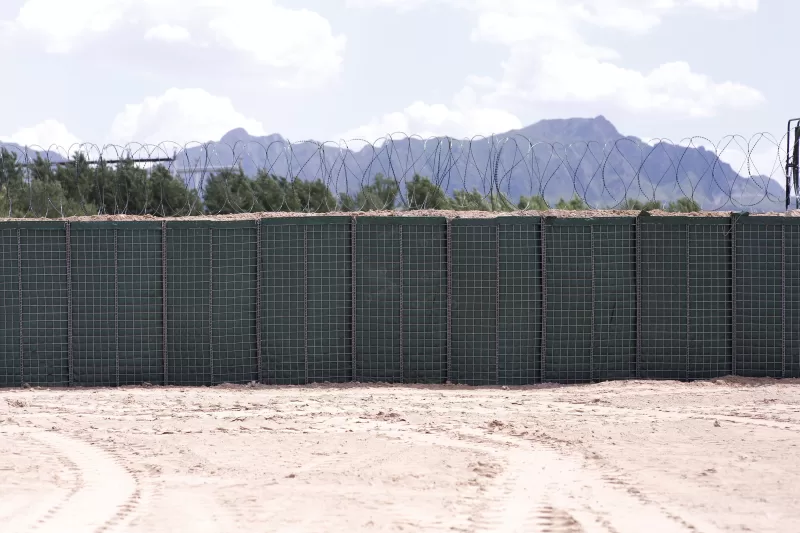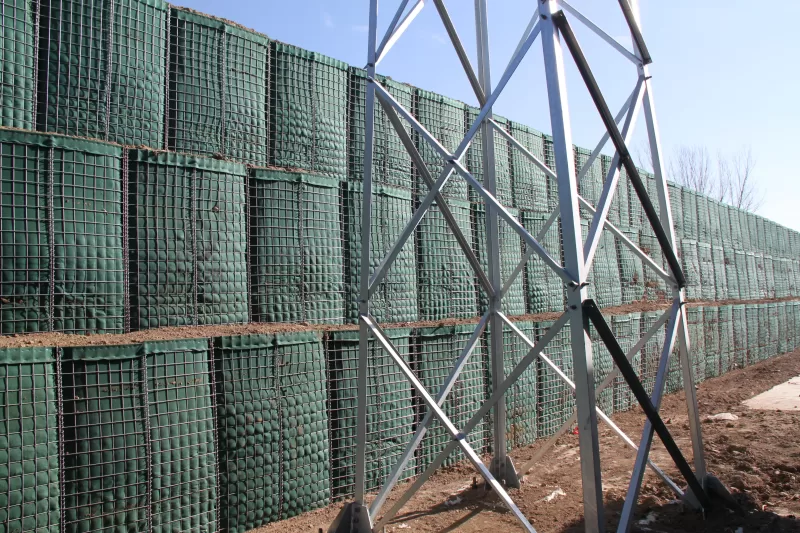
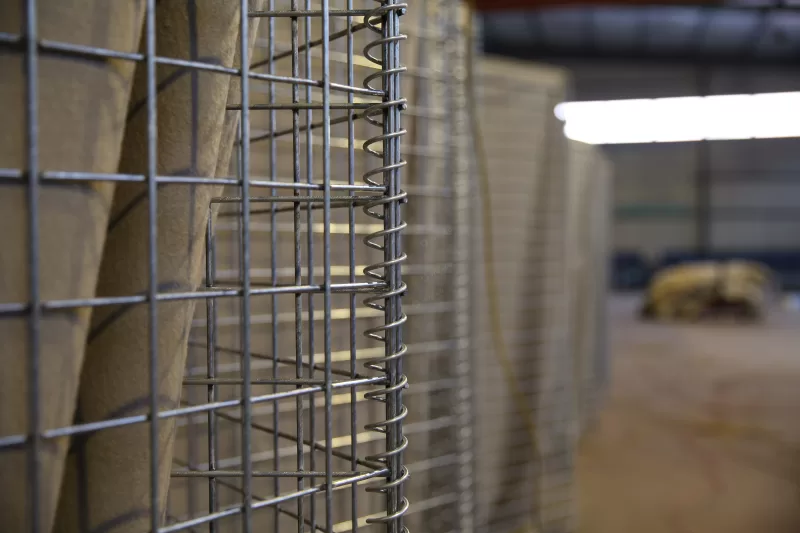
Buyers compare panel thickness and height first. That is reasonable. But in a fill-type system, the liner does the quiet work:
it keeps soil inside the structure and limits water passing through it.
Remove the liner, and you have a wire basket that slowly deposits its own mass onto the pavement behind it.
That is why our Flood Control Barriers are supplied with a 2 mm polypropylene geotextile liner as a standard component, not an optional extra.
What the Liner Has to Do
1.Contain the fill:The 2 mm polypropylene construction resists puncture during filling and holds granular material in place under hydrostatic pressure.
2.Limit seepage: Reduced water passage means less scour behind the line and less saturation of the protected area.
3.Survive sunlight:UV inhibitors prevent the fabric from becoming brittle during multi-day deployments in open conditions.
4.Release cleanly at demobilisation:Dry soil should fall out when the unit is tipped, so the Flood Control Barriers can be folded and returned to storage without residue.
Choosing Fill for Your Flood Control Barriers
Clean sand / gravel:Drains well, settles predictably, easy to remove Urban sites, paved areas, repeated use
Site soil:Readily available, faster placement
Emergency raises, rural reaches
Wet clay:Heavy, sticks, hard to clean out
Last resort only
Confirm local availability before committing to a unit count. Fill volume drives machinery time more than panel count does.
Frame and Liner Working Together
Welded low-carbon steel panels with spiral spring connections give the liner a stable frame that flexes slightly under load instead of splitting.
With more than 10 unit sizes available, height can be matched to water level without over-building.
Specify It Properly
When requesting a quote, state liner thickness, UV treatment, and whether spare liners should be included. We list these items explicitly in every configuration sheet.