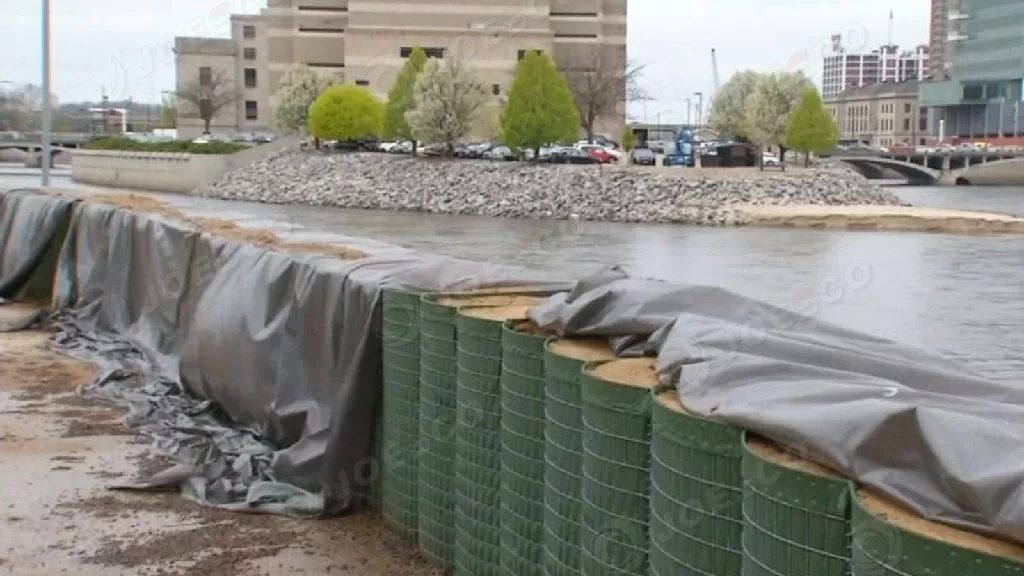
🌊 1. River Ecological Restoration: Srepok Riverbank Stabilization, Vietnam (2024)
- Challenge: Monsoonal floods caused 15m/year of bank erosion, endangering farmland and villages.
- Solution:
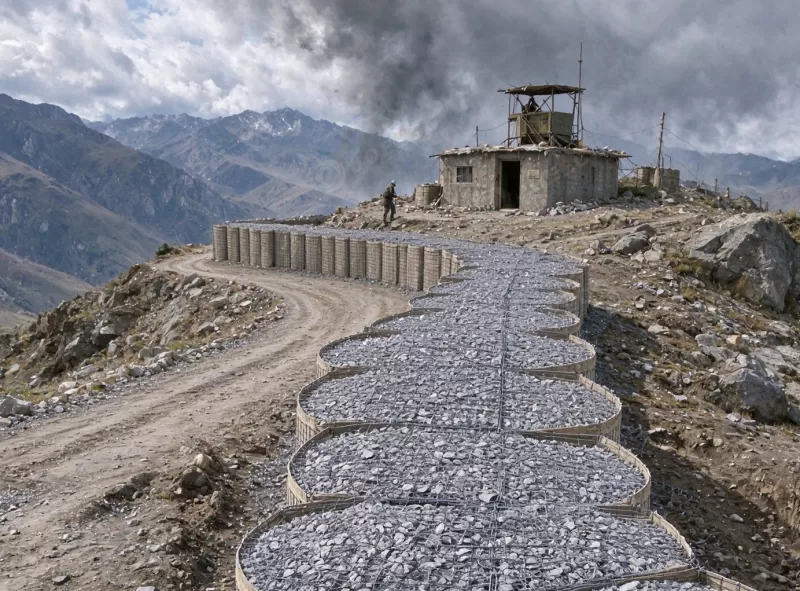
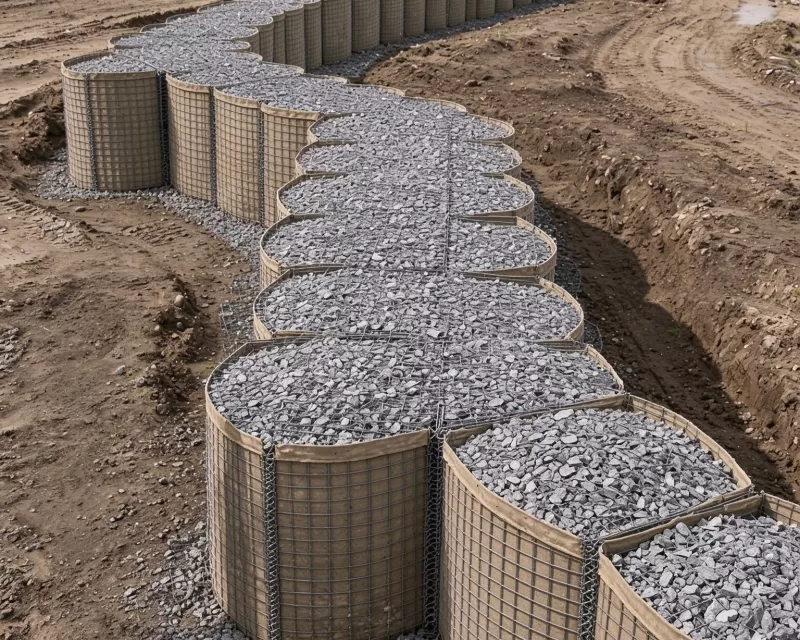
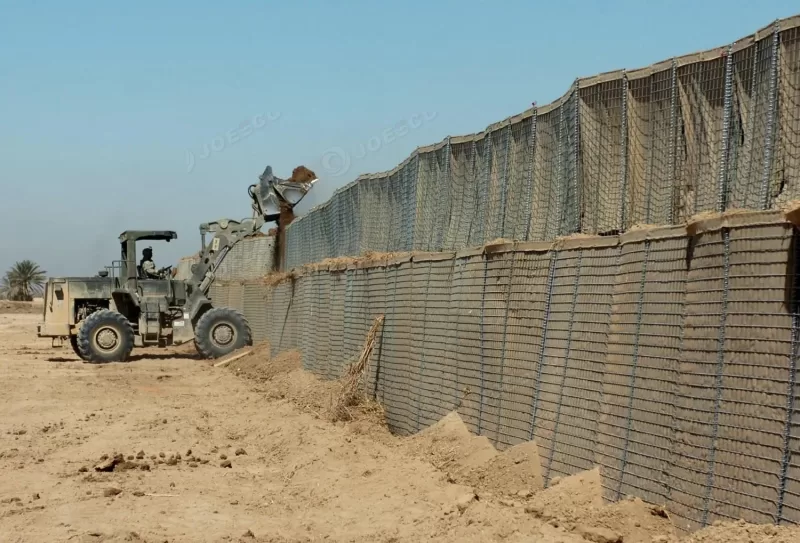
- Deployed 2.1 km of JOESCO barriers (30° water-facing slope) filled with volcanic rock (70%) and recycled rubber granules (30% for fragmentation absorption).
- Seeded vetiver grass through barrier gaps; roots reached 3m depth, enhancing soil shear strength.
- Ecological Monitoring Data (18 months post-deployment):
Metric Pre-Intervention Post-Intervention Change Bank erosion length 15m/year 0 100% control Fish population density Baseline 100% 135% +35% Water turbidity (NTU) 45 28 -38% Native vegetation cover 12% 68% +467% Mechanism: Barrier pores trapped sediment while vetiver roots stabilized soil, achieving sedimentation at 8cm/month.
⛰️ 2. Mining Area Restoration: Hüsamlar Copper Mine, Türkiye (2023–2025)
- Scale: 576 hectares (equivalent to 800 football fields).
- Technology Integration:
- JOESCO units filled with alkaline-neutralizing materials (limestone + organic matter) to counter acid mine drainage.
- Planted 250,000 native saplings (pines, oaks) with drip irrigation.
- Efficacy Metrics:
- Sapling survival rate: >80% average (peaking at 96%), versus <60% for traditional methods.
- Fauna recovery: 17 bird species (including endangered red-footed falcons) and 5 mammal species observed within 12 months.
- Carbon sequestration: Estimated 4.2 tons/hectare/year (sapling stage).
- Socioeconomic Impact:
Trails and wetland parks boosted eco-tourism revenue by $12M/year.
🏜️ 3. Desertification Control: Minqin County, China (2024)
- Challenge: 90% of the county faced sand encroachment at the convergence zone of Badain Jaran and Tengger deserts.
- JOESCO Application:
- Gridded barriers (47,000 m²) filled with Haloxylon ammodendron saplings and straw bundles.
- Drought-tolerant shrubs planted to form multi-layered barriers.
- Wind Erosion Control Data:
Parameter Bare Sand JOESCO Zone Wind speed reduction Baseline 62% Topsoil moisture 3.2% 8.7% Dune migration speed 16m/year 1.2m/year Outcome: Vegetation cover rose from <5% to 38% in 3 years, trapping 48,000 m³/km of sand.
📊 4. Urban Ecological Corridor: Beigong Town, Beijing (2024)
- Goal: Establish an ecological network amid urban sprawl.
- JOESCO Implementation:
- Barriers deployed along minimal cumulative resistance paths, linking 6 core habitat patches.
- Filled with porous ceramsite and humus; planted native shrubs.
- Ecological Connectivity Gains:
- Corridor length extended by 23 km; fragmentation index dropped from 0.58 to 0.31.
- Wildlife migration resistance reduced by 72%.
- Microclimate Regulation:
Barrier zones recorded 4.2°C lower surface temperatures in summer; PM2.5 absorption reached 1.2kg/100m/year.
🔬 5. Core Mechanisms & Cross-Case Validation
- Bio-Engineering Synergy:
- Plant roots penetrating barriers added “live reinforcement” (tensile strength increased by 200% in 12 months).
- Porosity (30–40%) promoted sedimentation (>15cm/year bank rebuilding).
- Carbon-Water Cycling:
- Soil organic carbon reached 45.3 tons/hectare in restored mines.
- River barriers sequestered 78 tons CO₂-eq/km/year.
- Cost-Efficiency:
- Operational costs 60% lower than concrete alternatives.
- 3–5-year payback period via ecological dividends.
💎 6. Best Practices for Ecological Engineering
- Design Standards: Tiered barriers for slopes >25°; >8% fill moisture in arid zones.
- Monitoring Tech:
- IoT sensors track stress/humidity in real-time.
- Drone spectral scans quantify vegetation health and erosion hotspots.
- Policy Integration:
Academic-community partnerships cut restoration costs by 40%.