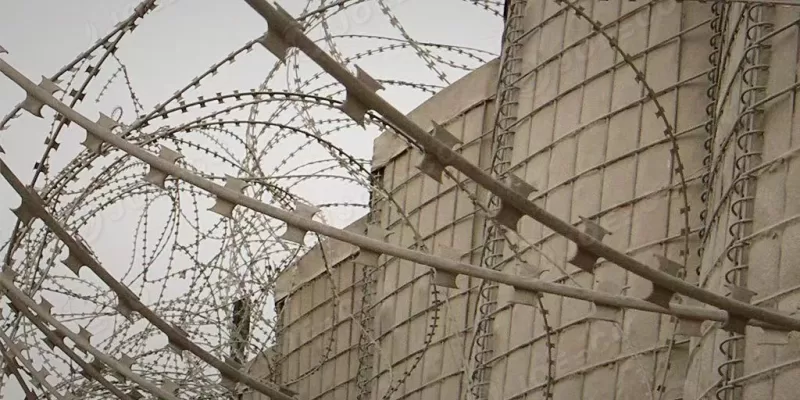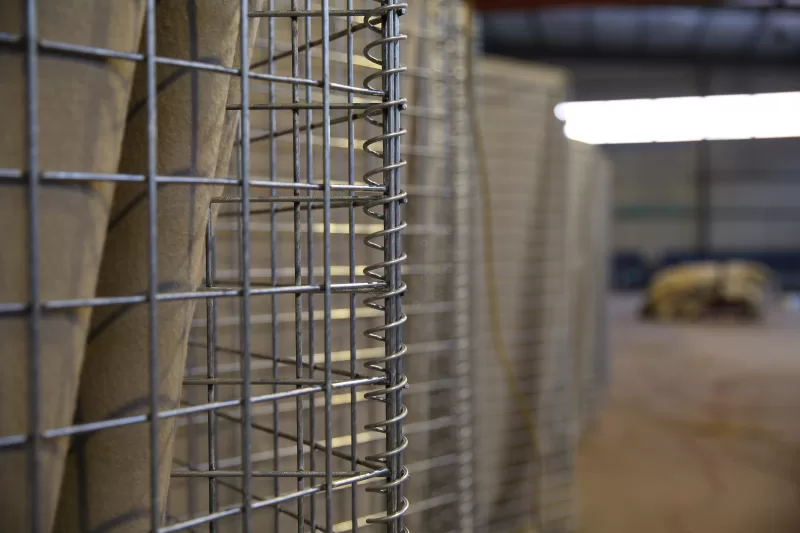

Landslides, flooding, and soil erosion threaten infrastructure globally. JOESCO’s JOESCO barrier retaining walls deliver military-grade stabilization—collapsible galvanized steel mesh units lined with geotextile fabric, filled with on-site materials, and stacked to 4m+ heights. Unlike rigid concrete, these dynamic walls flex with ground movement, absorb hydraulic pressure, and install 10x faster. Trusted by NATO and flood agencies, they redefine retaining wall efficiency.
Core Engineering: Materials & Design
| Component | Specification | Functional Advantage |
|---|---|---|
| Steel Mesh | 4–5mm diameter; Galfan coating (Zn-5%Al) | 50-year corrosion resistance in saltwater |
| Geotextile Liner | 300–400g/m² UV-stabilized polypropylene | Filters water while trapping sediment |
| Cell Geometry | 76×76mm hexagonal apertures | Distributes load evenly; prevents fill loss |
| Modularity | Stackable units (0.61m–2.74m height) | Adapts to slopes >25° with anchor kits |
QS Series Retaining Wall Models
| Model | Height | Width | Slope Angle | Key Applications |
|---|---|---|---|---|
| QS-2 | 0.61m | 0.61m | ≤35° | Landscaping terraces; creek banks |
| QS-3 | 1.00m | 1.00m | ≤45° | Highway embankments; urban floods |
| QS-7 | 2.21m | 2.13m | ≤60° | Military bunkers; coastal levees |
| QS-12 | 2.13m | 1.06m | ≤70° | Landslide zones; mine rehabilitation |
All units interlock horizontally and stack vertically (e.g., dual QS-3 = 2.74m wall).
Why JOESCO Outperforms Traditional Retaining Walls
1.Dynamic Load Management
•Flexibility: Absorbs seismic shifts and soil settlement without cracking (unlike concrete).
•Hydraulic Pressure Relief: 30–40% porosity allows water drainage, reducing hydrostatic buildup by 60%.
2.Rapid Deployment
•Install 100m of wall in 4 hours with 3 operators + excavator.
•Folded units occupy 80% less space than precast concrete blocks during transport.
3.Eco-Efficiency
•Reusability: Clean and redeploy barriers across projects (10+ cycles).
•Local Fill: Use on-site soil/sand—eliminates quarrying and transport emissions.
Critical Applications & Case Studies
•Landslide Stabilization (Italy, 2024):
Terraced QS-12 walls halted soil slippage on 45° slopes, reducing erosion by 90% with native grass revegetation.
•Military Base Fortification (Afghanistan Protocol):
Stacked QS-7 barriers stopped RPG fragments and 7.5-ton vehicle rams at NATO forward operating bases.
•Riverbank Protection (Mississippi, 2023):
Curved QS-3 units redirected 3m/s currents, preventing levee breaches during record floods.
Installation Protocol
1.Site Prep (30 mins):
Laser-grade slope; clear debris. Anchor first unit on bedrock for inclines >15°.
2.Assembly (60 mins):
Unfold and interlock units with ASTM F2656-rated spiral pins (≤5mm gap tolerance).
3.Filling (90 mins):
Mechanically compact fill in 30cm layers—sandy loam (85% Proctor density) for erosion control; quarry stone (95%) for blast zones.
4.Reinforcement:
Add geogrid layers behind barriers for slopes >50° or seismic zones.
Cost-Benefit Analysis
| Metric | JOESCO Barriers | Concrete Walls |
|---|---|---|
| Installation Cost | $42/linear meter | $120+/linear meter |
| Lifespan | 50 years | 20–30 years (cracks) |
| Maintenance | Pressure-wash every 5 years | Structural repairs required |
| Eco-Impact | 70% lower CO₂ footprint | High cement emissions |
JOESCO Innovations for Retaining Walls
•TerraLock™ Anchors: Geotech bolts secure barriers on unstable slopes without concrete footings.
•BioGrid™ Liners: Seed-embedded geotextiles promote vegetation growth for natural reinforcement.
•SmartWall Sensors: Monitor tilt >2° or stress >50kPa via IoT alerts.
4-Step Selection Guide
1.Threat Assessment:
•Erosion rate? Flood depth? Vehicle impact risk?
2.Slope Analysis:
•Use drones to map incline angles and soil shear strength.
3.Height Calculation:
•Retaining wall height = (soil depth × 1.2) + 0.3m buffer.
4.Fill Optimization:
•Sandy soil for drainage; clay-stone mix for blast resistance.