Why Perimeter Topping Choice Matters
Choosing between razor wire and barbed wire is not a brand preference. It is a risk decision driven by threat level, deterrent intent, and who might come into contact with the fence line. A cattle pasture perimeter and a high-security military base should never use the same topping, even though both products look similar on a spool.
Both options work by making a fence harder and slower to cross. The difference is in how they hurt, how easily they are defeated, and how much injury liability a site accepts. This guide breaks down the engineering differences so procurement officers can match the wire to the risk.
Design and Construction Compared
| Attribute | Barbed wire | Razor wire |
|---|---|---|
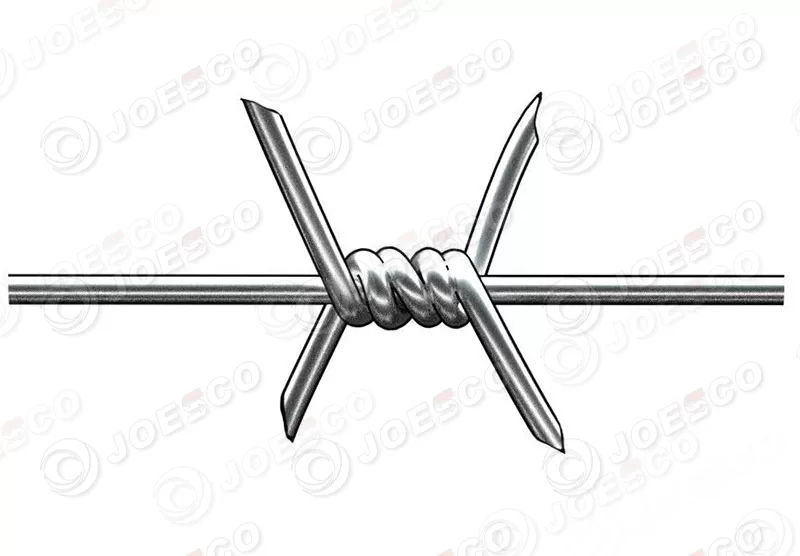
| Core wire | Twisted double-strand, typically 12.5 gauge | High-tensile steel strip, 0.5 mm |
| Cutting element | Four-point barbs every 75–125 mm | Pressed steel blades (BTO-22, CBT-65) |
| Standard profile | Line wire, twisted or single strand | Concertina coils (450–980 mm diameter) |
| Deterrent rating | Low to medium | High |
| Injury severity | Scratches and punctures | Lacerations, possible deep cuts |
| Typical cost (per linear meter installed) | USD 0.40–0.80 | USD 2.50–6.00 |
Installation Height and Configuration
Barbed wire is normally installed in 3 to 6 horizontal strands along the top of a chain-link or welded mesh fence, with arms that hold it at 45° outward. JOESCO stocks galvanized barbed wire in 12.5 gauge with 4-point barbs every 100 mm as the standard utility spec.
Razor wire comes in three configurations that change the engineering:
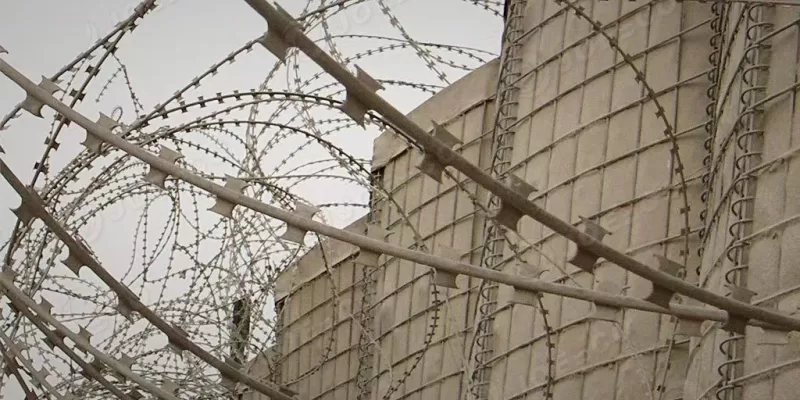
- Concertina (helical coil): self-supporting coils clipped together, deploys 60 m in under 30 minutes
- Flat wrap: razor ribbon pressed flat against the fence panel, lower visual profile
- Welded mesh-backed: razor strip welded to a mesh panel for permanent high-security sites
For military perimeters, JOESCO supplies BTO-22 (blade thickness 0.5 mm, blade length 22 mm) as the standard deterrent. See our full razor barbed wire product range for BTO-22, CBT-60, and CBT-65 specs. For correctional or industrial sites, CBT-65 (heavier 0.65 mm strip, 65 mm blade) is the go-to choice because it holds shape better on long runs.
Where Each Wire Wins
Use barbed wire when:
- The site is agricultural, ranch, or low-security commercial
- The threat is opportunistic trespass rather than organized intrusion
- Liability from severe injury is unacceptable (schools, parks)
- Budget per linear meter is below USD 1.00
Use razor wire when:
- The site is a military base, prison, refinery, or utility substation
- Defeat time is the priority, even if injury is a known risk
- The fence already has welded mesh panels that can support razor clips
- The perimeter must be deployable within hours (concertina coils on pallets)
Standards and Liability
Most NATO and federal specifications call out specific blade profiles and minimum coil diameters. ASTM A121 covers barbed wire; ASTM F1669 covers chain-link and welded mesh topping hardware. For military procurement, MIL-A-1154 has historically been referenced, though many buyers now accept ISO 9001 certified mill production as the equivalent quality basis.
Liability sits with the installer. Razor wire installed over a public footpath creates a duty-of-care issue. Always angle outward, never inward, and add the bright warning signs most jurisdictions require. For more on-line threat modeling and deterrent design, see our JOESCO field engineering notes.
Field Installation Notes
JOESCO installation crews report three failure modes that come up year after year:
- Razor wire sagging on long runs. Without intermediate posts every 4 m, a long coil run stretches under its own weight and the deterrent profile flattens. Add a T-post or Y-bracket every 3–4 m.
- Barbed wire rust at the splice. A hand-tied splice breaks the galvanizing at the joint. Use factory-made splice clips or pre-coiled connection hardware to keep the coating intact.
- Wrong coil diameter for the threat. A 450 mm diameter coil is fine for low-to-medium security, but a determined intruder can part it with a blanket. Specify 700–980 mm diameter coils for high-security perimeters.
FAQ: Razor Wire vs Barbed Wire
Can I install razor wire on an existing chain-link fence?
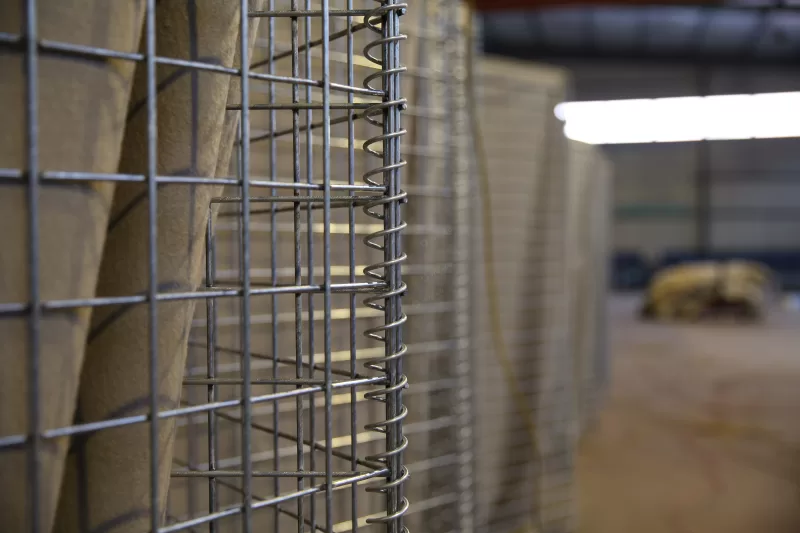
Yes. JOESCO supplies bracket arms for 45° outward extension and clip sets that fit standard line-post tops. Existing posts rated for at least 1.6 kN/m wind load are usually fine for a single coil run. We also offer rapid deployment barriers that integrate razor toppings as part of the perimeter package.
Which is harder to cut with bolt cutters?
Razor wire, because the pressed blade keeps the cut wire from falling away. A bolt cutter attack on razor wire damages the tool and leaves a jagged, hard-to-grip end. Standard barbed wire cuts cleanly and can be parted in seconds.
Is razor wire dangerous to wildlife?
Yes. Avoid razor wire on sites where protected species cross the fence. Use barbed wire on wildlife corridors and game-reserve perimeters instead.
How long does concertina razor wire last outdoors?
Hot-dip galvanized coil (Zinc coating 230 g/m²) gives 15–25 years in temperate climates. Stainless clips last the life of the wire.
Do you offer pre-loaded pallet packs for rapid deployment?
Yes. JOESCO ships 60 m concertina coils on stackable pallets that drop straight from a truck into a perimeter line, no uncoiling station required.
Not sure which wire matches your threat model? Send JOESCO your site photos and fence spec, and we will recommend the right profile and ship it on a stackable pallet.